
Schools without trees
Most government school campuses have barren grounds, no shade, and no biodiversity.
Poshan Van Abhiyaan
A school-based plantation and environmental education initiative for 168 government schools in Mandsaur district.
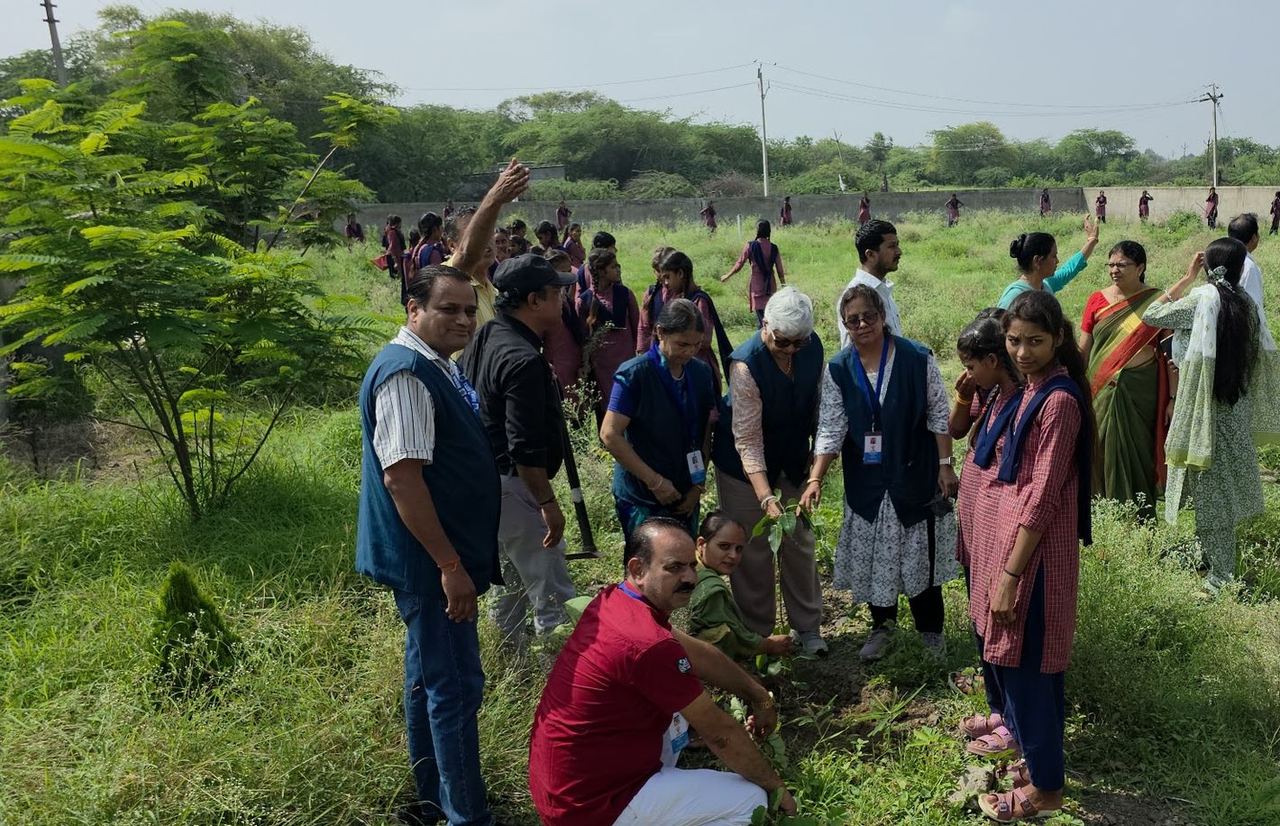
Sarthak proposes to plant fruit, medicinal, and shade trees on government school campuses, and to teach the students who will look after them. Each school receives 21 saplings. Across 168 schools, that is 3,528 trees of 20 species.
168 government schools in Mandsaur district. No green cover. No environmental education. 50,000 children waiting.
Most government school campuses have barren grounds, no shade, and no biodiversity.
More than 50,000 students from farming families have had no exposure to climate literacy or ecology.
Semi-arid Mandsaur faces recurring water stress, declining green cover, and soil degradation.
Success in 168 schools can become a blueprint for the 52,000-plus government schools in Madhya Pradesh.
21 saplings at each of 168 schools.
1. Month 1
Soil testing and a readiness check at each school.
2. Month 2
Environmental awareness for teachers and students, and the formation of eco-clubs.
3. Month 3
Saplings of fruit, medicinal, and shade species.
4. Months 4–5
Students plant the saplings themselves. Each sapling is tagged with GPS.
5. Months 4–5
Tree guards, mulch, organic manure, and watering support.
6. Months 6–12
Quarterly audits, care by the eco-clubs, and tracking of which trees survive.
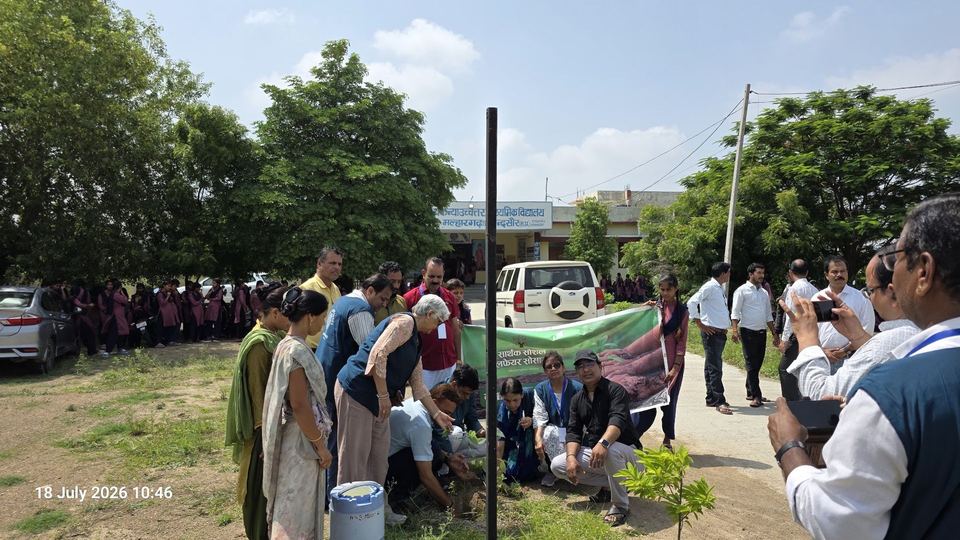
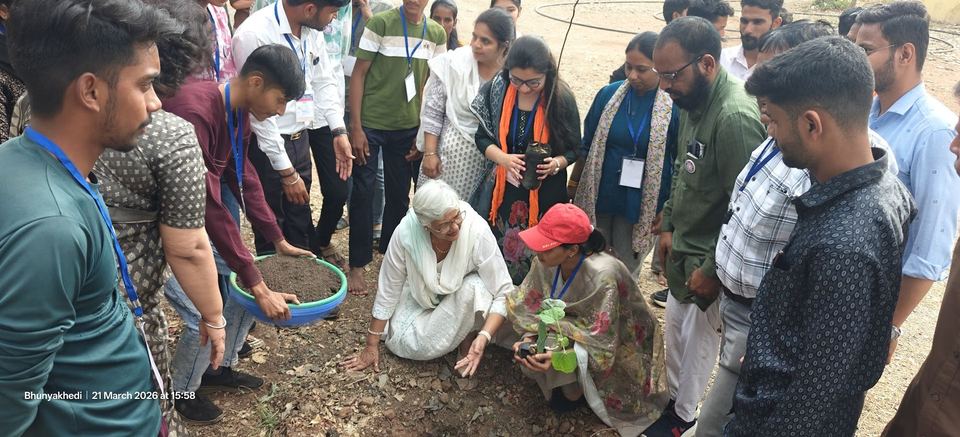
Planting with students, from Sarthak’s album
3
Fruit and medicinal trees, and a chance for students to learn how trees relate to nutrition and health.
4
School grounds become places to learn, with environmental literacy built into the year.
11
Greener campuses that also serve the neighbourhoods around the schools.
13
More than 50,000 students taking part as young people who can speak for the climate.
15
More biodiversity on campus, and habitat for birds and pollinators.
Mandsaur has 8 blocks. More than one partner can take different blocks, so the district can still be covered together.
168 schools · 3,528 trees
₹39.4 lakh
A large company looking for a flagship CSR project.
About 21 schools · about 441 trees
About ₹4.9 lakh
A mid-size company, for one block.
10 schools · 210 trees
About ₹2.3 lakh
A smaller company, a startup, or a first CSR grant.
1 school · 21 trees
About ₹23,460
An individual donor, or a staff giving programme.
Any number of trees
₹1,117 a tree
A budget that needs to be set tree by tree.
60% at the start, 30% at the midpoint, and 10% when the planting year is complete.
A partner can begin with one school at ₹23,460, or take the full district at ₹39.4 lakh.
Sarthak is a registered organisation in Mandsaur, founded in 2012. The proposal cites more than 30,000 trees planted, more than 250 drives, more than 10,000 students trained, and a survival rate above 85%.
Dr. Urmila Tomar, founder and chairperson, leads the work. She was a principal and a deputy director in the education department.
Write to Sarthak about a school, a block, or the full district. The donation box on this site is still a placeholder, so confirm any gift with the society before sending money.